
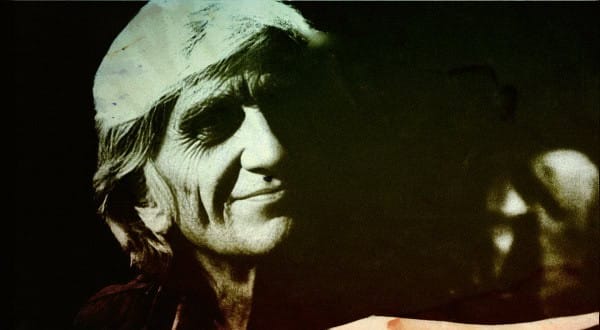
Gil Evans Orchestra this weekend – at a concert given during the 1987 Umbria Jazz Festival featuring Lew Stolff, Ack van Rooyen, Miles Evans, Dave Bargeron, John Clark, Chris Hunter, John Surman, George Adams, Delmar Brown, Hiram Bullock, Mark Egan and Danny Gottlied. Recorded on July 18, 1987 and preserved for posterity by West German Radio.
Gil Evans became interested in music at an early age, listening to Duke Ellington, Louis Armstrong, and Fletcher Henderson on the radio and on records. He studied the piano and began learning how to arrange music, and started picking up jobs with local musicians. While in college, he founded his first band, which performed his arrangements, and which became the house band at the Rendezvous Ballroom in Balboa Beach, California, in 1935. The band toured the Pacific Northwest in 1937 and eventually settled in Hollywood, where they regularly performed on Bob Hope’s radio show. Gil Evans’ arrangements from this time showed the influence of classical music, and included instruments such as French horns, flutes, and tubas. In 1939, Claude Thornhill was hired for Hope’s show, and he became a major influence on Evans.
From 1957 onwards, Evans recorded albums under his own name. Tubist Bill Barber and trumpeter Louis Mucci from Thornhill’s band were both stalwarts in Evans’s early ensembles, with Mucci finding a spot on nearly every pre-1980s Evans recording. Among the featured soloists on these records were Lee Konitz, Jimmy Cleveland, Steve Lacy, Johnny Coles and Cannonball Adderley. In 1965, he arranged the big band tracks on Kenny Burrell’s Guitar Forms album.
Evans was influenced by Spanish composers Manuel de Falla and Joaquín Rodrigo, and by other Latin and Brazilian music, as well as by German expatriate Kurt Weill. His arrangements of pieces already well known to some listeners from their original cabaret, concert hall or Broadway stage arrangements, revealed aspects of the music in a wholly original way. Sometimes in an unexpected contrast to the original atmosphere of the piece, and sometimes taking a dark ballad such as Weill’s “Barbara Song” into an even darker place.
The personnel list for The Individualism of Gil Evans (1964), not only features Bill Barber and hornists James Buffington and Julius Watkins (along with two others), but each section features the cream of the younger (some more classically trained) musicians who were making their names in jazz. The presence of four of the most acclaimed young bassists (Richard Davis, Paul Chambers, Ron Carter, and Ben Tucker) along with veteran Milt Hinton would ordinarily indicate that each is used individually for separate tracks, but Evans’s scores usually required at least two bassists on any given track, some playing arco (with the bow) and some pizzicato (plucking with fingers, the standard jazz method). These arrangements frequently featured greatly slowed-down tempos with polyrhythmic percussion and no prevailing “beat”. To his by-now standard French horns and tuba, Evans’s scores added alto and bass flutes, double reeds, and harp; orchestral instruments not associated with “swing” bands, providing a larger palette of orchestral colors, and allowing him to attain the ethereal quality heard in his arrangements during his Thornhill days. He frequently wrote a part for the tenor violin of Harry Lookofsky. Yet, this album featured an orchestral arrangement of “Spoonful” by bluesman Willie Dixon, an early indication of Evans’s breadth and a hint of things to come.
And for a taste of Bill Evans Orchestra in 1987 – press play and dive into the Umbria Festival.
